What’s changed and what is still the same ten years down the road of child loss?
I’ve thought about this a lot in the past few months as I prepared for, greeted and marked another year of unwelcome milestones since Dominic ran ahead to Heaven.
Some things are exactly the same:
Whenever I focus solely on his absence, my heart still cries, “Can he REALLYbe gone?” I am STILL A Mess Some Days….
The pain is precisely as painful as the moment I got the news.
It’s just as horrific today to dwell on the manner of his leaving.
I miss him, I miss him, I miss him. I live every day with his Tangible Absence.
I am thankful for his life, for the opportunity to be his mama and for the part of me shaped by who he was.
The absolute weight of grief has not changed. The burden remains a heavy one.
Daily choices are the difference between giving up and going on. I have to make Wise Choices in Grief.
My faith in Christ and my confidence that His promises are sure is the strength on which I rely. I have been Knocked Down But Not Destroyed.
I passionately look forward to the culmination of all history when every sad thing will come untrue.

Some things are very different:
Dominic’s absence is no longer all I see.
Sorrow and pain are no longer all I feel.
I’ve learned to live in spite of the hole in my heart-his unique place isn’t threatened by allowing myself to love others and pouring my life into the people I have left.
Joy and sorrow are not mutually exclusive. They live together in my heart and I can smile and laugh again while still pining for a time when things were different and easier.
I am Stronger because I’ve carried this burden for years. I’ve learned to shift it from side to side.
The darkness has receded so that I see light once more. I’m not as prone to fall as fast down the dark hole of despair.
My heart longs for reunion but has also learned to treasure the time I have left here on earth.
I’ve never hidden the struggle and pain of this journey.
But I don’t want those who are fresh in grief to think that how they are feeling TODAY is the way they will feel FOREVER.
By doing the work grief requires, making wise choices and holding onto hope a heart does begin to heal.
I am not as fragile today as I was on the first day.
Gratitude is important. It is (in my opinion) a necessary ingredient for a healthy and hope-filled and useful life. It is the key to any real happiness a heart might find on this broken road.
But it cannot fill up the empty place where Dominic used to be.
While I certainly had no real idea in the first hours or even weeks what losing a child entailed, I understood plainly that it meant I would not have Dominic to see, hold or talk to.
I wouldn’t be able to hug his neck or telephone him.
He wouldn’t be sitting at my table any more.
But the death of a child or other loved one has a ripple effect. It impacts parts of life you might not expect. As time went on, I was introduced to a whole list of losses commonly called “secondary losses”.
Here are just a few:
Loss of a large chunk of “self”. Dominic possessed part of my heart and part of my life. It was violently ripped away when he died. There is part of me that was uniquely reflected from him-like a specialty mirror. I can never access that part of me again.
Loss of identity. Before Dominic died I was one kind of mother. I was a mother of four living children who were making their way in the world as successful adults. I was a mother looking forward with happy anticipation to the next years. Now I am still a mother of four children but one whose heart has been changed by tragedy and sorrow. Tomorrow is still bright, but there’s a shadow just behind it.
Loss of self-confidence. I used to enter a room without a thought to how I’d be received or perceived. That’s definitely not the case now. I’m self-conscious-constantly wondering if I’m saying or doing the right thing. I never know if a grief trigger will (at best) pull my attention away from conversation or (at worst) send me scurrying for the bathroom.
Loss of sense of security. I think every parent has moments of fear over his or her child. When they first go off someplace without us, when they get a driver’s license, travel abroad, go to college. But all the awful things I imagined didn’t hold a candle to the reality of waking one morning to a knock on my door and the news that Dominic had been killed. The bottom fell out of my (relatively) safe world. Bad things, random things can and do happen. Once it happened to ME, it changed how I processed everything. The passing years have softened some of the anxiety but I will never be able to assume safety again.
Loss of faith. I did not “lose” my faith. I never once doubted that God was still working, was still loving and was still in control. But I most certainly had to drag out every single thing I thought I knew about how I thought He worked, loved and superintended the world and examine it in light of my experience of burying my son. It took a long time to work through all the pat answers I had been offered and myself doled out to others for years that didn’t fit with my new reality. I am learning that doubt is not denial and that I have to live with unanswered questions.
Loss of family structure. I’ve written before that a family is more than the arithmetic total of the number of members. There were six of us. But we were so much more than six when we were all together! Our talents, personalities and energy were amplified in community. When Dominic’s large presence was suddenly whisked away, every relationship got skewed. We’ve fought our way back to a semblance of “whole” but still miss him terribly. We can function, but we will never be the same.
Loss of my past. Memories are funny things. They are plastic and subject to change. And my recall of an event is limited to my own perspective. For a memory to be rich and full, I need input from others who were there as well. One vessel of family memories is no longer available to add his unique contribution. Every time I pull out a photo or dig down deep in my heart to draw up a treasured moment, I realize I’ve lost something I can not recover. The joke, the glance, the odd detail are all gone.
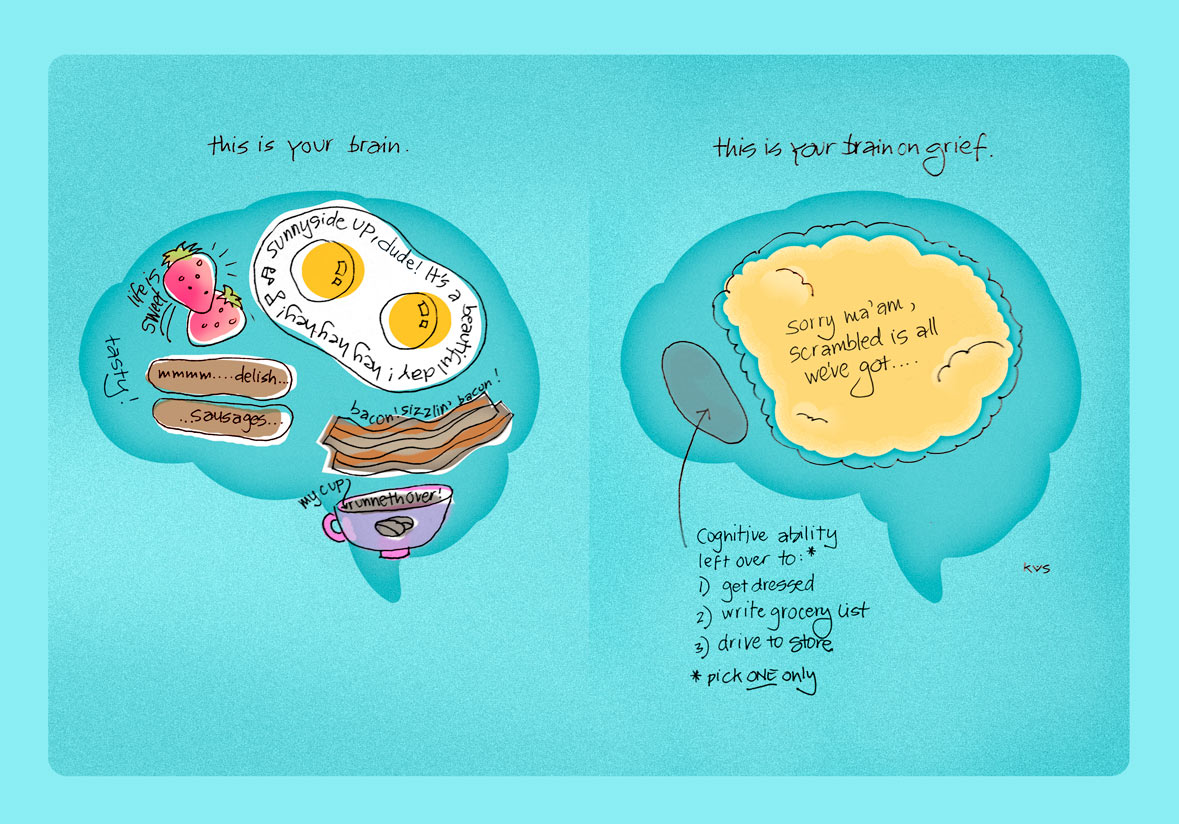
Loss of the future I anticipated. I’m a planner by nature. Not a detailed, OCD, got-everything-in-order kind of planner, but a “big picture” kind of planner. When Dominic left us in 2014, things were going (pretty much) according to plan. Each child was well on his or her way to the career path they had chosen. I was easing into an empty nest and exploring options for life after homeschooling. My husband was entering his last few years of a lengthy career. It’s hard to explain to anyone who hasn’t experienced it, but when your world is shaken by child loss, everything gets scrambled. You can’t just pick up where you left off and keep going with the pieces that remain.
There’s a prolonged period of confusion and everyone is impacted differently and in ways you could never imagine. All of us have changed dramatically in the years since Dominic left us. He is not the only thing missing from the rest of our lives. Holidays are altered. Birthdays are different. We have to plan special events around uncomfortable milestone dates that roll around every year whether we want them to or not. It’s a constant readjustment to life as it IS instead of life as I thought it WOULD be.
Loss of ability to focus and function. Oh, how this surprised me! I was in some kind of zone for the first month after Dominic left. My other children were home, we had to make it through planning his funeral, two graduations and cleaning out his apartment. I also had to handle paperwork for my husband to take short-term disability due to grief. I cried a lot, wrote down dozens of notes but managed to do what I had to do. Then I crashed. I couldn’t remember a thing. I couldn’t read more than a couple sentences at a time. I hated the telephone. I could barely stand to hear the television. I had to make a list of the most basic things like brushing my teeth, feeding my animals, turning off all the lights before bed. It was awful! And it didn’t really get better for well over a year.
I still suffer from a very short attention span, low tolerance for noise and an inability to accommodate last minute changes. I don’t schedule anything back to back. I live in a rural area and sometimes shop in the nearby town. I will start the day with a long list and shorten it repeatedly as I go along because driving in traffic, crowds and random sounds ramp up my anxiety and make me want to go home with or without what I came for. I have changed the way I do so many things. My pre-loss memory has never returned.
Loss of patience. I am at once impatient and long-suffering. I have zero patience for petty grievances, whining and complaining. Yet I have compassion for other people living hard and unhappy stories. I berate myself for not being “better” and, at the same time, extend grace to others who aren’t “better” either. I want to shake people who bowl over weak, hurting, desperate souls. I don’t have time for moaning about rain when you were planning a picnic but will listen for hours to a mama tell me about her missing child.
Loss of health. I had a number of chronic health conditions before Dominic ran ahead. Within the first year of his departure, I was hospitalized twice. My experience is not unique. Some parents suffer immediate health effects (heart attack, blood sugar spikes, anxiety/depression) and some see a slow decline over time. In part because child loss, like any stressor, will negatively impact health and also because sometimes bereaved parents stop doing the things that help them stay healthy. At almost five years, I’ve learned how to manage the stress better although some of my health issues continue to get worse. It’s hard to tease apart what is age, what is disease and what is grief.
When your child leaves this life before you do, it changes everything.
Not only things you might expect, but many you’d never imagine.
It’s a constant balancing act, readjusting every day to new challenges.
I can only live forward and there are no do-overs.
No amount of regret can roll back the clock and give me another chance to do it right, do it better or just do it at all.
I can’t undo or redo my past.
If I’ve made blunders, hurt hearts, missed opportunities or just plain screwed up, I have to live with that. And other people might have to live with the damage I’ve inflicted.
I need to own that.
But it is not helpful to let regret stop me working NOWto repair, restore and rebuild relationships.
Sometimes my best efforts may be rebuffed.
If I’ve hurt someone’s heart they have every single right to tell me, “No. I won’t let you back in.” I don’t get to establish a timeline for their healing. But if I don’t try to make amends I can be sure the rift won’t be mended.
If someone has hurt me I can choose to look beyond that pain, forgive the offense and commit to begin now, leaving the past in the past, and start fresh.
If so much time has passed that it feels awkward-so what? Embarrassment is a small price to pay for restoration.
So write a letter.
Send a card.
Make a phone call.
Offer peace.
There’s a proverb that’s been spoken by my family for years. It goes like this. A young man asks an old farmer, “When’s the best time to plant a tree?”
The old man answers, “The best time to plant a tree was twenty years ago. But the next best time is now.”
I can’t go back and sow seed or plant trees when I wish I had.
But of all the factors that promote healing, there is NO SUBSTITUTE for time–not in the physical world of surgery and broken bones and deep wounds and not in the inner world of emotional pain and brokenness and sorrow.
Our bodies are made to be amazingly resilient.
Most people don’t really think of surgery as an assault on the body, but it is.
The surgeon knifes through layers of flesh and tissue that are designed to keep intruders out, mucks about inside, does what he or she came to do, and closes up–hopefully without introducing bacteria into the wound. Some medication may be prescribed to promote healing, control pain and reduce the risk of infection.
Then the patient goes home to recover.
But it is really TIME and the body’s own healing powers that do the lion’s share of the work.
Our hearts and minds can be resilient too.
Frequently, someone who suffers an assault on their emotions may not bear outward signs and symbols to mark what they’ve been through. And well-meaning friends and family can forget that healing has only begun and is far from complete.
Sometimes broken people feel pressured to put on a brave face and to stuff their feelings.
For the body, ignoring doctor’s orders to rest after surgery can mean another hospital stay due to complications that might have been avoided if the patient had been given sufficient time to recover.
Emotionally wounded people can end up with complications from pressure to rejoin regular activities and engage society in ways for which they are not yet ready.
It takes TIME to heal from burying a child or any other traumatic loss.
There is no way to rush the healing. It takes HOURS AND HOURS to think about, respond to and process the feelings that overwhelm anyone who is grieving or trying to cope with emotional upheaval of any kind.
So be patient with yourself.
Understand that there will be good days and bad days.
There will be forward movement and steps backward.
Sometimes it will be easy to do something or go somewhere and the next time it might be really hard.
And don’t be afraid to let others know you are still healing.
Deep emotional wounds require great care and an extended period of time to heal if the healing is to be sound and free from unnecessary complications.
You are not selfish to draw boundaries around what you can and can’t do, what you will and won’t allow and where and when you engage with others-you are being wise.
For those walking with the wounded: extend grace and be patient.
Thank God you are not bearing this burden and be mindful of placing demands or pressure on the wounded to heal according to a predetermined timetable.
Then support them in their effort to give themselves the TIME they need to heal.
I was afraid of the dark until I was almost forty years old.
My fear was rooted in scary childhood moments and even years of adult experience could not rip it from the soil of my psyche. I never could convince my heart what my head knew to be true: there was nothing in the dark that wasn’t also there in the light.
It was fear, not darkness, that controlled me.
There is great darkness in grief. So many unanswerable questions, so much anquish, so much pain.
And there is darkness in many other painful, unchangeable circumstances.
The darkness can hide things that I see clearly in the light. And if I’m not careful, I can allow the darkness to foster fear and keep me from venturing futher.
In my own strength, depending on my own resources, I am afraid.
But when I call out from my scary place to the God Who made me, I can face the fear in confidence He hears and cares.
When I am afraid, O Lord Almighty, I put my trust in you.
Psalm 56:3 GNT
Sometimes believers in Christ can convince themselves that admitting their world is dark with pain or suffering or questions diminishes the power of God–that it speaks ill of God or that it means God is insufficient to uphold us in our weakness.
If I pretend that I’m never afraid, or that I never experience darkness, I am denying others my aid.
Even worse, I may be shaming them to silence, sending the message that if they are experiencing pain, something is wrong with THEM.
How many people are sitting in our pews with broken hearts and broken lives, afraid to reach out for help because–in addition to the pain of their broken life–they live under condemnation?
Life is full of pain and darkness. Even for those who follow Jesus.
When I deny that truth, I also refuse to testify to God’s power to help me carry on and give me the courage to face my fear.
God is the God of the day AND the God of the night.
I do not diminish Him by admitting that I experience both.
He invites me to lean into Him and to hold hands with His children as I journey on, even when it’s dark.
“Christians with this unflinching faith in the sovereign God do not deny grief. But even in their darkest hours, they borrow God’s strength. In their tears and pain they cling to God who will never let them go. What the Savior has done for others He will do for you. When you are shaken, and you know that life will never be the same again, you can trust and not be afraid. You can live in HOPE with the sturdy confidence that God will dry your tears and put you on your feet again.”
“Grief, Comfort for Those Who Grieve and Those Who Want to Help” by Haddon W. Robinson
To deny the presence of pain is to diminish the power of the cross.
Dying, Jesus honored His mother’s courage by acknowledging her pain. She was losing the Son she loved and it hurt in a way that only mothers can comprehend. He didn’t tell her that it would “be alright” or that “the ending is ultimately victorious”.
Instead, He looked upon her trembling figure and saw her broken heart.
He made what practical provision He could by telling John to care for her. He knew it would not undo her sorrow.
Some in the church preach that pain and suffering are anomalies–that they are aberrations in the “victorious Christian life”.
And we place great emphasis on the idea that even though we may have trouble in this life–“We know theREST of the story!” Jesus WINS!
Yes. He. does.
But some of our earthly stories-the ones we are living right now- do not have tidy, happy endings:
Some are burned in the fire.
Some die of cancer.
Some fall headlong into mental illness.
And some bury their children.
What to do when you are confronted by undeniable pain in your own or someone else’s life?
Acknowledge it.
Look with mercy on the broken heart.
Allow suffering to flow from the cracks unchecked and unjudged.
Be still and be love.
Offer practical aid without strings attached. Be mindful of what is actually helpful even if it doesn’t make sense to you. Come alongside for the long haul.
There is no greater gift to the one who is suffering than a faithful friend who refuses to be frightened away.
Loving burden-bearers help those of us living with no-happy-ending earthly stories cling more securely to the hope of ultimate victory in Christ.
And by doing so, declare the power of the cross.
For the message of the cross is foolishness [absurd and illogical] to those who are perishing and spiritually dead [because they reject it], but to us who are being saved [by God’s grace] it is [the manifestation of] the power of God.
I don’t know about you, but I think of every day as a blank canvas and it’s my responsibility to paint something useful or beautiful or helpful on it.
I’m a list maker so each night before I drift off, I usually jot down 3 or 300 things I would like to do the next day.
I get up, get started and then (more often than I’d like to confess!) hit a wall.
Sometimes it’s the wall of circumstance. Things happen I didn’t expect and suddenly the hours I was going to spend cleaning the garage are spent cleaning a mess.
Sometimes it’s the wall of community. Someone calls. Or a multitude of someones call. I hate to admit it but I’m really not a fan of the telephone. Like Alexander Graham Bell, I consider it more of an inconvenience and interruption than a means of delightful connectivity. Minutes slip by and I can’t recover them.
I love my friends and family.
But I’d rather chat while we are doing something together in person than over the phone.
Sometimes it’s the wall of pain. Rheumatoid Arthritis, like all autoimmune diseases, is unpredictable. Usually I can tell in the early morning hours if my joints are going to cooperate on a given day. But sometimes they surprise me and I find that all that yard work will have to wait.
Sometimes it’s the wall of grief or sadness or longing or any of a multitude of feelings. I have gotten pretty skilled at steering clear of grief triggers when I know I have lots of things to do. I don’t listen to the songs friends post on their timelines or read too many comments on the sites for bereaved parents. But I can’t anticipate random sights, sounds or memories. I’ve been working on a room, cleaning drawers, moving stuff tucked in corners and come across a Lego man or a pellet from the air soft guns they weren’t supposed to shoot inside the house (but of course did anyway) when the boys were young. That does me in and I have to walk away.
Sometimes it’s the wall of “What difference does it make anyway?!!” This one I usually see approaching in the distance when there have been too many days and too little progress. Or a string of gray, rainy mornings. Or multiple failed attempts at fixing something. And then I throw up my hands and decide my paltry attempts at controlling my corner of the world hardly matter, so why keep doing them.
So I give in and let myself just have a day.
It doesn’t have to be a good one or a productive one or even a cheerful one. The glass can just be a glass. I don’t have to pretend it’s half-full or declare it half-empty.
And after a rest I usually remember that what I used to find impossible is now possible; what used to be hard, is often a little easier.
I am stronger and better able to carry this load.
Sorrow is no longer all I feel nor my son’s absence all I see.
And although THIS day may be lost. It’s only ONE day.
It’s perfectly OK for me to sit down with a cup of coffee, a book or a movie and let myself off the hook.
There are many times in my life when I’ve felt small and unseen.
Many times when my spirit sank so low I couldn’t even remember “up” much less find it.
But there is no moment so humbling as the one when I came face-to-face with the undeniable FACT that my son had exhaled for the last time.
Walking into the sanctuary where his body lay still, unnatural and absolutely silent, my heart shattered into even smaller pieces.
So I understand Job’s cry.
I cry out to You for help, but You do not answer me; when I stand up, You merely look at me.
Job 30:20 HCSB
I know what it is to fall to the ground in utter dejection, complete hopelessness and pray, pray, pray that life leaves my body because the pain is unbearable.
That’s one reason Lent is a kind of relief every year.
It’s a season when others join me in admitting that from dust we came and to dust we will return.
But it’s also a season of hope.
Because while Lent forces my heart to focus on my frailty, it points me toward my Savior.
The One who made us is the One who rescues us.
The One who saves us is the One who sees us.
The One who sees us is the One who longs to comfort us.
I love this blessing by Jan Richardson:
“All those days you felt like dust, like dirt, as if all you had to do was turn your face toward the wind and be scattered to the four corners
or swept away by the smallest breath as insubstantial—
did you not know what the Holy One can do with dust?
This is the day we freely say we are scorched.
This is the hour we are marked by what has made it through the burning.
This is the moment we ask for the blessing that lives within the ancient ashes, that makes its home inside the soil of this sacred earth.
All those days you felt like dust, like dirt, as if all you had to do was turn your face toward the wind and be scattered to the four corners
or swept away by the smallest breath as insubstantial—
did you not know what the Holy One can do with dust?
This is the day we freely say we are scorched.
This is the hour we are marked by what has made it through the burning.
This is the moment we ask for the blessing that lives within the ancient ashes, that makes its home inside the soil of this sacred earth.
So let us be marked not for sorrow. And let us be marked not for shame. Let us be marked not for false humility or for thinking we are less than we are
but for claiming what God can do within the dust, within the dirt, within the stuff of which the world is made and the stars that blaze in our bones and the galaxies that spiral inside the smudge we bear.”
—Jan Richardson, Blessing the Dust, For Ash Wednesday
It’s no secret I am frail, prone to break-even shatter-into the tiniest bits of dust.
But that doesn’t stop my God from gathering what’s left to make something beautiful.
When I find myself face down in the dirt, no strength to lift my head, I remind my heart, “[Do] you not know what the Holy One can do with dust?”
Twenty-four hours separate one of the most outlandish global parties and one of the most somber religious observances on the Christian calendar.
Many of the same folks show up for both.
Mardi Gras, “Fat Tuesday”, is the last hurrah for those who observe Lent-a time of reflection, self-denial and preparation before Resurrection Sunday.
It’s a giant party-food, fellowship and fun-a wonderful way to celebrate the blessings of this life.
Ash Wednesday, by contrast, is an invitation to remember that“from dust you came and to dust you will return”.
None of us get out of here alive.
Even where the Gospel is preached every Sunday there are those who forget this life is hard and often full of pain and suffering.
If your experience so far has looked more like Mardi Gras and less like ashes, well, then-be thankful.
But don’t be deceived.
“From dust you came and to dust you will return.”
For some of us it was a similar twenty-four hour turnaround that upset our world, tossed us headfirst into the waves of sorrow and burned that truth into our hearts, not just dabbed it on our foreheads.
Sometimes I feel excluded from fellowship with the saints because I can’t join in the celebratory spirit of a worship service.
When the hymns only focus on our “victory in Jesus” my heart cries, “Yes-but perhaps I won’t see the victory this side of heaven.”
When the congregation claps and dances to feel-good songs that celebrate the sunshine but ignore the rain, my eyes swim with tears because I know the reality of a downpour of sorrow.
Because sometimes praise is a sacrifice.
Church needs to be a place where we can share the pain as well as the promise that Christ will redeem it.
Jesus Himself said, “in this world you will have trouble”.
So I can’t claim allegiance to the Church of the Perpetually Cheerful.
I want to create space for the hurting and broken and limping and scared.
How about a new denomination that acknowledges the truth that life is hard.
Instead of the “Overcoming Apostolic Praise-filled Ministers of Eternal Optimism” I would name it the “Trudging But Not Fainting Faithful.“
I don’t know about you, but this year I feel especially beat up. I’ve had personal circumstances and family circumstances that have once again plunged me beneath the heavy and impenetrable fog of grief.
It will be an unbelievable twelve years since Dominic ran ahead to Heaven on April 12th. He died the Saturday before Palm Sunday and was buried the Monday after Easter.
When the dates and days don’t correspond, I feel like most years I experience it all twice.
Photo by Katie Jewell Photography
And even though I depend on the observance of Lent to walk my heart through this Season of Sorrow, I just don’t have it in me to look up verses, parse their meaning and try to derive some deeper spiritual lesson from any of it.
But I want something structured to keep my focus from drifting away from the truth which keeps me anchored to hope.
If that resonates with you, then this Lenten Journaling Guide might be something that helps your heart too. I’d love to have company.
Before we start, I want to say this: Lent is not about performance. It is an invitation to walk honestly with Jesus.
For those who carry grief, surrender can feel complicated.
Some days you may have many words. Other days you may have none.
Both are sacred.
This journal is a gentle companion — not a task list. Move slowly.
Skip a day if needed. Linger where the Spirit meets you. You are not behind. You are not failing.